Keep me updated!
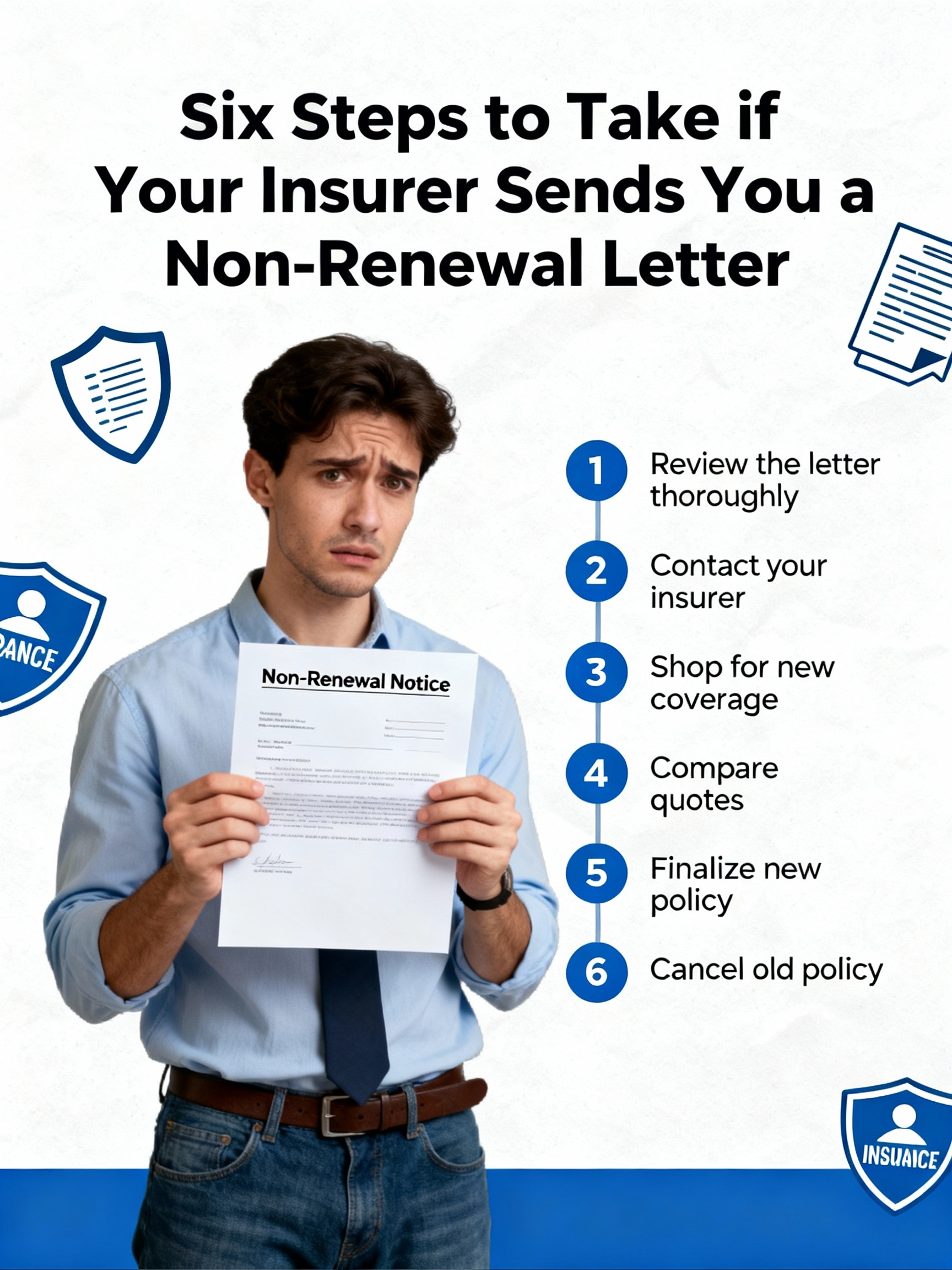
Insurance markets are shifting rapidly, and many homeowners are facing unexpected non-renewal notices. If your insurer decides not to renew your policy, time is critical. Here’s exactly what to do — step by step — to protect your coverage and keep your insurance in place.
Act Immediately When You Receive a Non-Renewal Notice
The moment your non-renewal letter arrives, take action. Don’t wait, don’t delay and definitely don’t assume the issue will resolve itself. Your insurer has informed you that your policy will not continue at renewal, and state laws typically give you only a short window to respond.
Identify the Reason for the Non-Renewal
Every non-renewal letter must include a reason. You may not agree with it, but you should receive at least a basic explanation. If the issue is something within your control — such as a property condition — you can potentially correct it and request reinstatement.
Common examples include:
• Missing or damaged roof tiles
• Empty or unsecured swimming pools
• Overgrown trees or branches hanging over the roof
If the problem is something you can fix, move quickly.
Notify Your Agent or Broker of Your Plan
Your insurer cannot read your mind. As soon as you understand the issue, email your agent or broker and let them know:
• You received the non-renewal notice
• You understand the stated concern
• You intend to fix the issue
• You will provide proof by a specific date
Put your commitment in writing and save every message you send and receive. Documentation is your best friend in situations like this.
Keep me updated!
Follow Through and Fix Every Listed Issue
If your letter lists items X, Y and Z, you must fix X, Y
and Z — not just the ones you feel are important. Insurers expect the full correction of all issues noted in the non-renewal letter. Partial fixes won’t be enough.
Commit to the repairs and complete them promptly.
Provide Clear Proof of the Completed Repairs
Once the work is done, show it off. Don’t wait for your insurer to send an inspector — many homeowners claim they will fix issues and never do, so insurers rely on your documentation.
Provide:
• Multiple photos from different angles
• Videos if helpful
• Any receipts, invoices or contractor statements
Send the proof to both your insurer and your agent/broker, then save their confirmation of receipt.
Confirm That Your Policy Has Been Reinstated
After submitting proof, follow up. Contact your insurer and your agent or broker to confirm that:
• The non-renewal has been rescinded
• Your policy will renew as originally scheduled
Insurers may use terms like “rescinded non-renewal” or “reinstatement,” but the meaning is simple: your policy is no longer being dropped. Get this confirmation in writing.
Non-renewals can be stressful, but homeowners often have more power than they realize. Act quickly, communicate clearly and provide proof — and you can often keep your policy in place.
Keep me updated!